
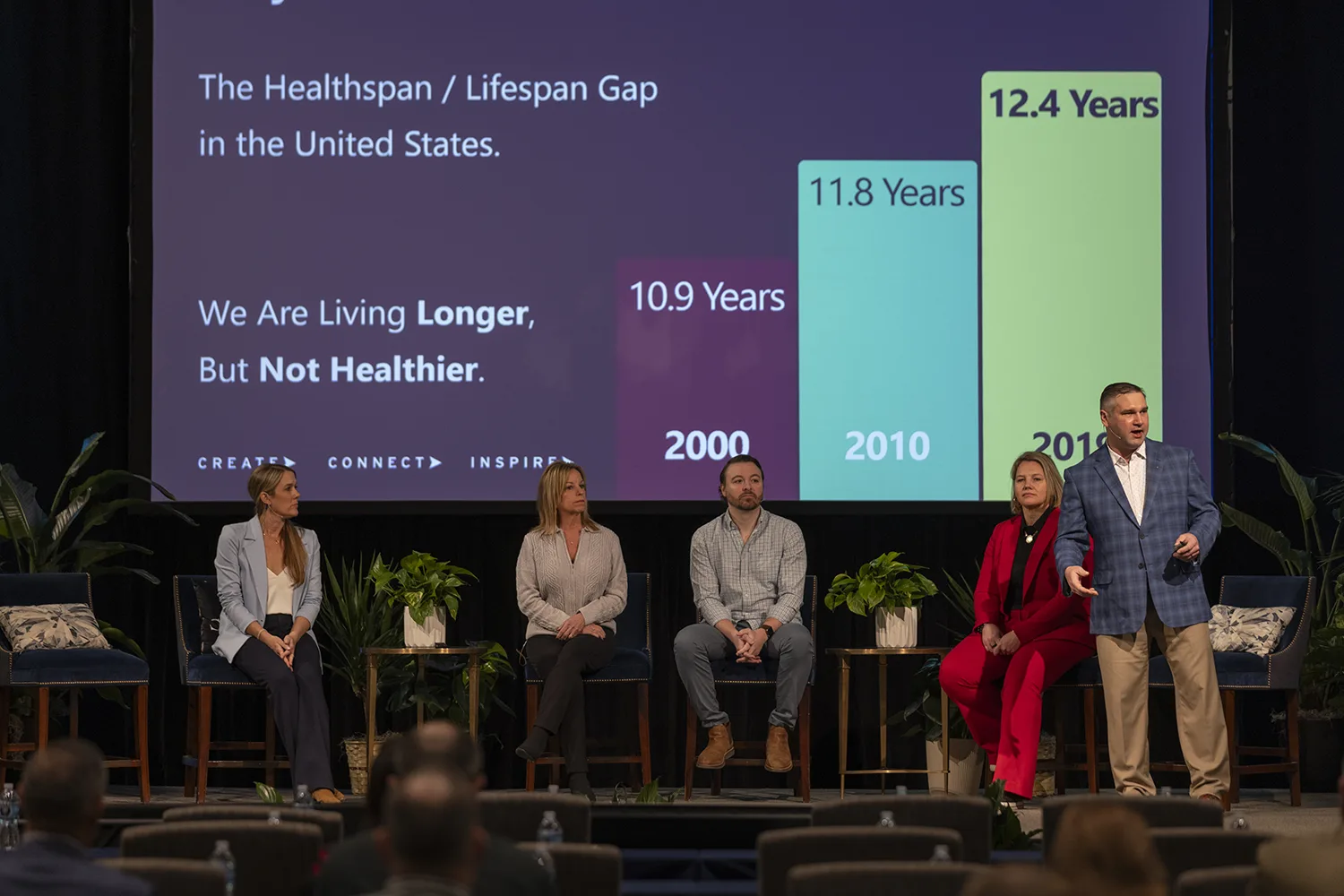
Wellness is often discussed in terms of programming or amenities. However, lasting impact requires a true culture of wellness that is designed, committed to, and reinforced every day, as Colin Milner, the founder and CEO of the International Council on Active Aging (ICAA), presented at By Design in 2024. After this well-received presentation, SFCS provided ICAA wellness audits to attending communities and current clients, which we then studied to better understand where we could better support our clients in creating a culture of wellness. This year, at By Design 2026, the concept of a culture of wellness was expanded, providing additional context and ideas around incorporating design to help decrease the gap between lifespan and health.
In this article, you’ll learn:
As Colin Milner discussed, a culture of wellness reflects an organizational commitment to supporting health, independence, and quality of life across every facet of the community. When wellness is embedded into daily life, residents are more likely to participate in programming consistently, maintain functional abilities, and remain socially connected.
For communities, this translates into more than positive resident feedback. Strong wellness cultures are tied to higher engagement, reduced transitions to higher levels of care, and greater long-term stability. Wellness outcomes are not accidental; they are formed intentionally through vision, planning, and follow-through.
One of the primary drivers behind the push for wellness is the widening gap between lifespan and health span. Advances in medicine have extended life expectancy, but many older adults now spend a considerable portion of those added years managing chronic conditions, mobility limitations, and declining independence.
According to the World Health Organization, the United States has one of the largest health span-to-lifespan gaps globally. This reality presents both a challenge and an opportunity for senior living communities to intervene earlier and more effectively.

Before digging into what to change culturally, it is important to understand that thriving is not accidental—it is supported by specific behaviors and health factors. According to the American Heart Association, the eight most critical factors and behaviors that influence wellness are:
However, it is encouraging that many of these factors can be influenced within a campus setting. With the right environments and programming, communities can help residents track progress, stay motivated, and maintain healthier lifestyles over time.
Investing in wellness is not solely a mission-driven decision, it is an operational one. According to the McKinsey Health Institute, each dollar invested in healthy aging initiatives returns three dollars in economic value through reduced falls, improved medication adherence, greater social engagement, and delayed transitions to higher levels of care.
Residents who stay independent longer have an improved quality of life, while stabilizing occupancy and reducing costly care escalation for the community. In this context, wellness becomes an economic imperative as well as a human one.
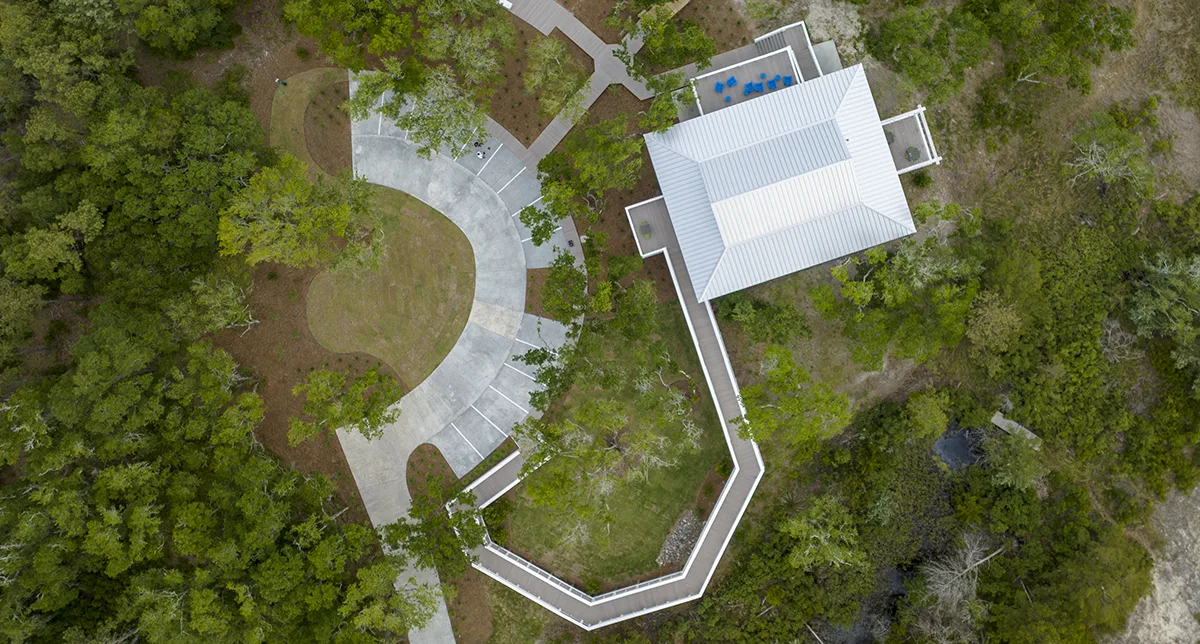
Trinity Landing, a retirement community in Wilmington, North Carolina offers a clear example of what it looks like to design wellness into a community from the beginning. From site planning to circulation, the campus was intentionally designed to encourage movement, connection, and outdoor engagement as part of daily life.
The layout functions like a walkable neighborhood, with visible destinations and continuous paths linking residences, amenities, and outdoor spaces. This design reduces barriers to participation and reinforces consistency, two factors critical to long-term wellness outcomes.
“It goes beyond the gym walls. It really extends out into your community—your outdoor spaces, chapels, dining program. All of these promote different dimensions of wellness,” said Chris McGill, a Design Architect and Senior Associate at SFCS.
Accessibility is also treated as a wellness strategy rather than a compliance exercise. For example, a gradual boardwalk leading to a waterfront pavilion allows residents of varying abilities to share the same experience.
“That is not a ramp. We call that a boardwalk or a walk in the park. Anyone of any level can access the space because of that gradual incline,” explains Ann Pressly, Director of Marketing Operations for Lutheran Services Carolinas.
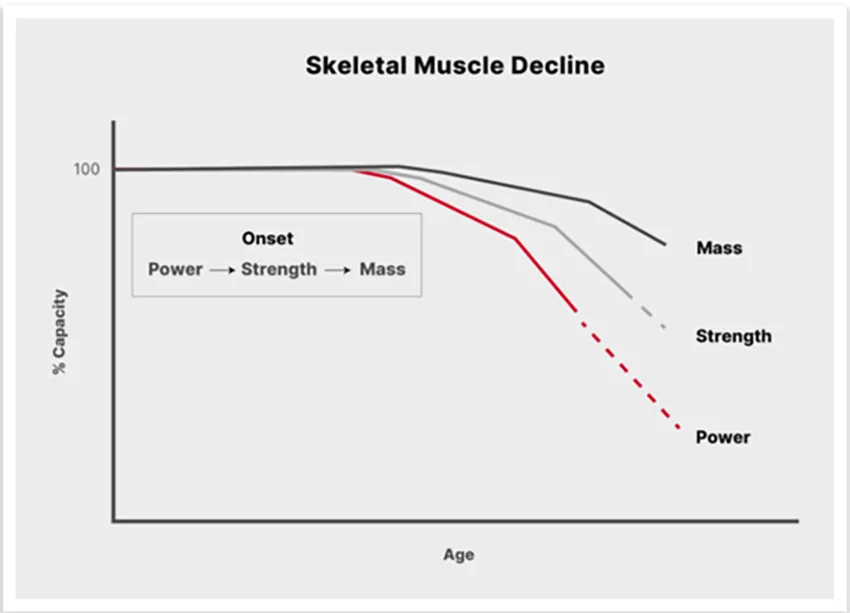
Wellness extends beyond walking paths. Maintaining strength and power is crucial to preserving independence. Crystal Johnson, STEP Director and Older Adult Market Specialist for Keiser, explained that adults who do not resistance train lose muscle mass steadily, with losses accelerating after age 50.
“Power drops off first and fastest, followed by strength and then muscle mass. That’s why how we train, and what we train for, matters,” Johnson said.
A pilot program at River Landing at Sandy Ridge in Colfax, North Carolina illustrated the impact of intentional resistance training paired with education and measurement. After 12 weeks, participants saw average improvements of 22% in leg power, 16.8% in sit-to-stand speed, and 11% in gait speed. These functional gains translated into greater confidence, independence, and social engagement.
Stronger, more independent residents are less likely to require higher-acuity services, which helps reduce healthcare utilization and protect long-term occupancy.
Wellness also plays a critical role in cognitive and brain health. During the Covid Pandemic, Asbury Methodist Village, a retirement community in Gaithersburg, Maryland, repurposed an underutilized country store and art gallery to create a new offering: the Brain Health Center.
The program, offered as an enhanced service, achieved a 25% participation rate and quickly reached capacity. Activities such as boxing, balance challenges, and cognitive games require residents to think, react, and move simultaneously, supporting both physical and cognitive resilience.
Enhanced wellness offerings like these can offset program costs while differentiating the community and responding to shifting resident expectations.
This article is a summary of the content presented during the session “Connecting Culture and Wellness: Inspiring your Community to Thrive” presented by Nate Futrell, Ann Pressly, Crystal Johnson, and moderated by Anne Hall and Chris McGill at SFCS’s 41st By Design: Create. Connect. Inspire. on February 4th, 2026.
If this year’s conversations around creativity, connection, and future-focused design resonated with you, we hope you’ll consider joining us on February 2 - 4, 2027 at the Hotel Roanoke in Roanoke, VA. Let us know you are interested!

Our team is committed to providing quality service, meaningful connections, and thoughtful design. We believe the balance of these key elements has the power to encourage relationships and create exceptional environments where people – and projects – can flourish.
We improve our services and advertising by using Microsoft Clarity. Learn more by reading our Privacy Policy and Disclaimer.


