
Leaders know that the hardest challenges ahead cannot be solved by repeating what has always been done. The good news is that fresh thinking is rarely hard to find. It is often already inside your organization, waiting for the right environment in which to surface.
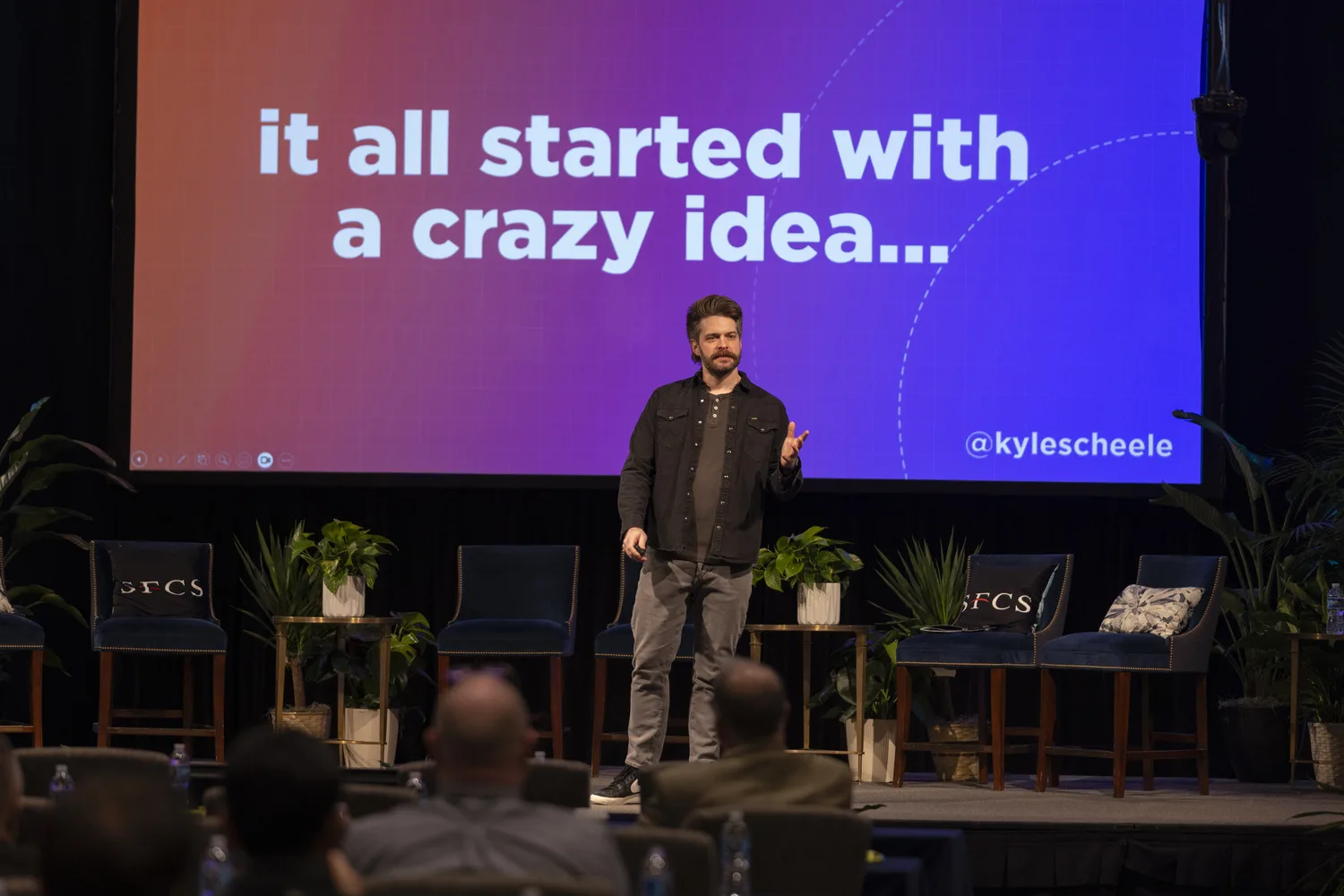
At SFCS’ By Design: Create. Connect. Inspire. conference, creator and author Kyle Scheele argued that progress often depends on ideas that sound unreasonable at first. Across stories that ranged from a teenage side business to large-scale creative experiments, he kept returning to the same point: leaders can build cultures where ideas are more likely to be found, nurtured, and launched, especially when people feel safe sharing them.
In this article, you will read about:
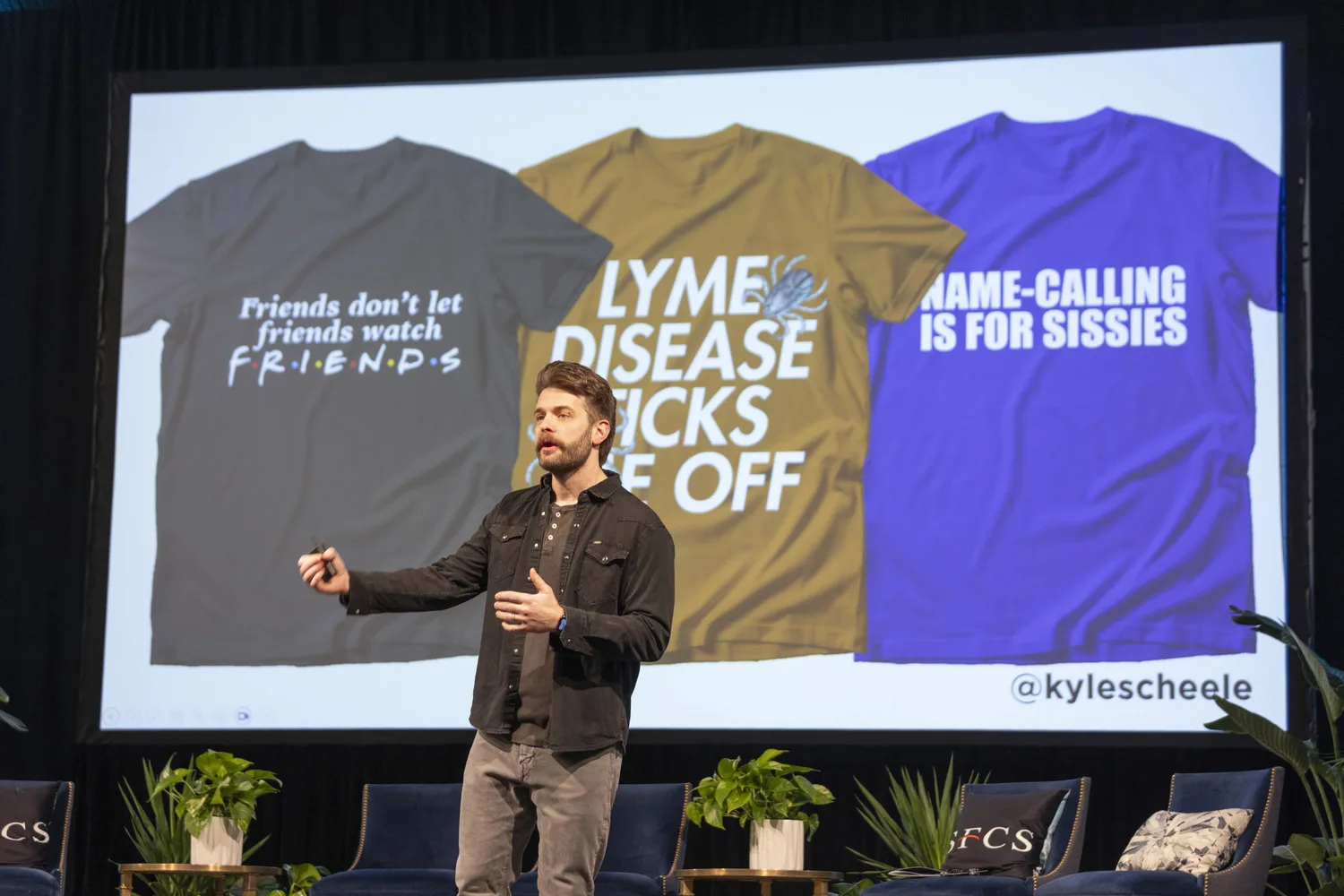
Scheele’s case for building an idea-friendly culture begins with a small, scrappy example. As a 17-year-old with no time for a part-time job, he started selling intentionally ridiculous t-shirts to classmates. He learned about sales, pricing, and the realities of running a small operation by doing it, improvising, adjusting, and reinvesting what little profit he made.
That early experience also taught him what happens when leaders draw lines without extinguishing initiative. When his principal told him he could not run a business on school grounds, he changed the location and kept going. Later, when a national retailer seemed out of reach, he still found a way to get his work in front of the right people, and it changed what became possible next.
His point wasn’t that every unconventional idea succeeds, but that the opportunities leaders want most often live on the other side of actions that feel risky, odd, or premature. As Scheele put it: “If you want conventional results, conventional ideas will get you there… But if you want crazy results, you must embrace crazy ideas.”
Creativity is not rare; it is human. Over time, many people learn to be “reasonable” and stop identifying as creative, even though they still solve problems and bring new things into the world every day. Organizations can unintentionally reinforce that shrinkage by reducing people to job titles rather than recognizing the perspective and experience they have.
That matters because leaders often keep their hardest problems to themselves. But when the target stays hidden, teams cannot aim their thinking at it. “I think so many times the problems that are keeping us up at night as leaders are solved already inside of our company, but the solutions are inside the head of someone whose ideas haven’t been given a chance,” said Scheele.
In senior living, this is especially consequential. The people closest to residents, families, operations, and day‑to‑day realities often see the friction points—and the possibilities—before anyone else. The question is whether the culture makes it easy for those observations to become shareable, discussable ideas.
Scheele offered two simple prompts leaders can use to remove internal barriers:
When employees do not know the target, or do not trust the process, great ideas arrive and then disappear before they can be heard.
Leaders may say they value creativity but then place ideas into environments where they never had a real chance because there is no support system for them to develop.
Progress depends on whether leaders make room for the next round of ideas to surface. When staff understand the challenges their leaders are carrying, and when there is a trusted path for suggestions to be captured and reviewed, innovation becomes less mysterious and more repeatable.
Many people talk themselves out of the very work they would later regret not trying. For organizations responsible for how people experience aging and looking for innovative solutions, the cultural choice is the same: treat experimentation as permissible, protect early ideas long enough to develop, and invite others to help make them stronger.
If this year’s conversations around creativity, connection, and future‑focused design resonated with you, we hope you’ll consider joining us next year.
Save the Date: February 2 - 4, 2027 at the Hotel Roanoke in Roanoke, VA

Our team is committed to providing quality service, meaningful connections, and thoughtful design. We believe the balance of these key elements has the power to encourage relationships and create exceptional environments where people – and projects – can flourish.
We improve our services and advertising by using Microsoft Clarity. Learn more by reading our Privacy Policy and Disclaimer.


