
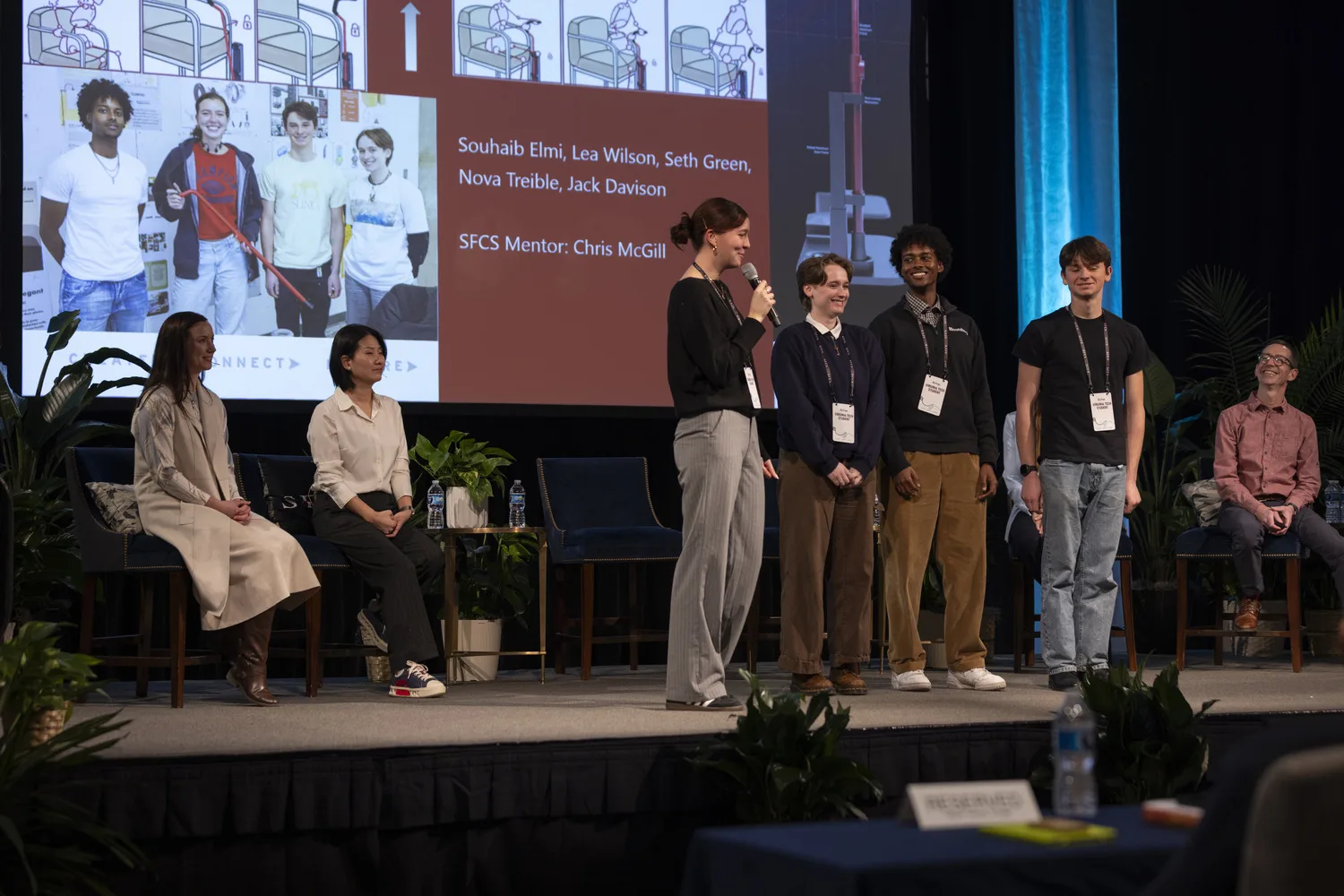
Designing for aging-in-place requires proximity to real lives, real routines, and involves real constraints. The strongest ideas take shape when the people who will use them are invited into the conversation early and often, helping guide the process from possibility to practical solution.
For the 17th year, Virginia Tech Industrial Design juniors were partnered with SFCS mentors and Warm Hearth Village residents to apply their classroom learning and create a product meant to enrich the lives of elders. Students conducted research and interviewed seniors in Blacksburg, Virginia to develop physical prototypes that tested their concepts in real-world conditions. In the years since the first SFCS sponsored studio for Senior Living, this collaboration between these three institutions has produced more than 130 projects, earned over 20 prestigious awards, and led to a patent pending product.
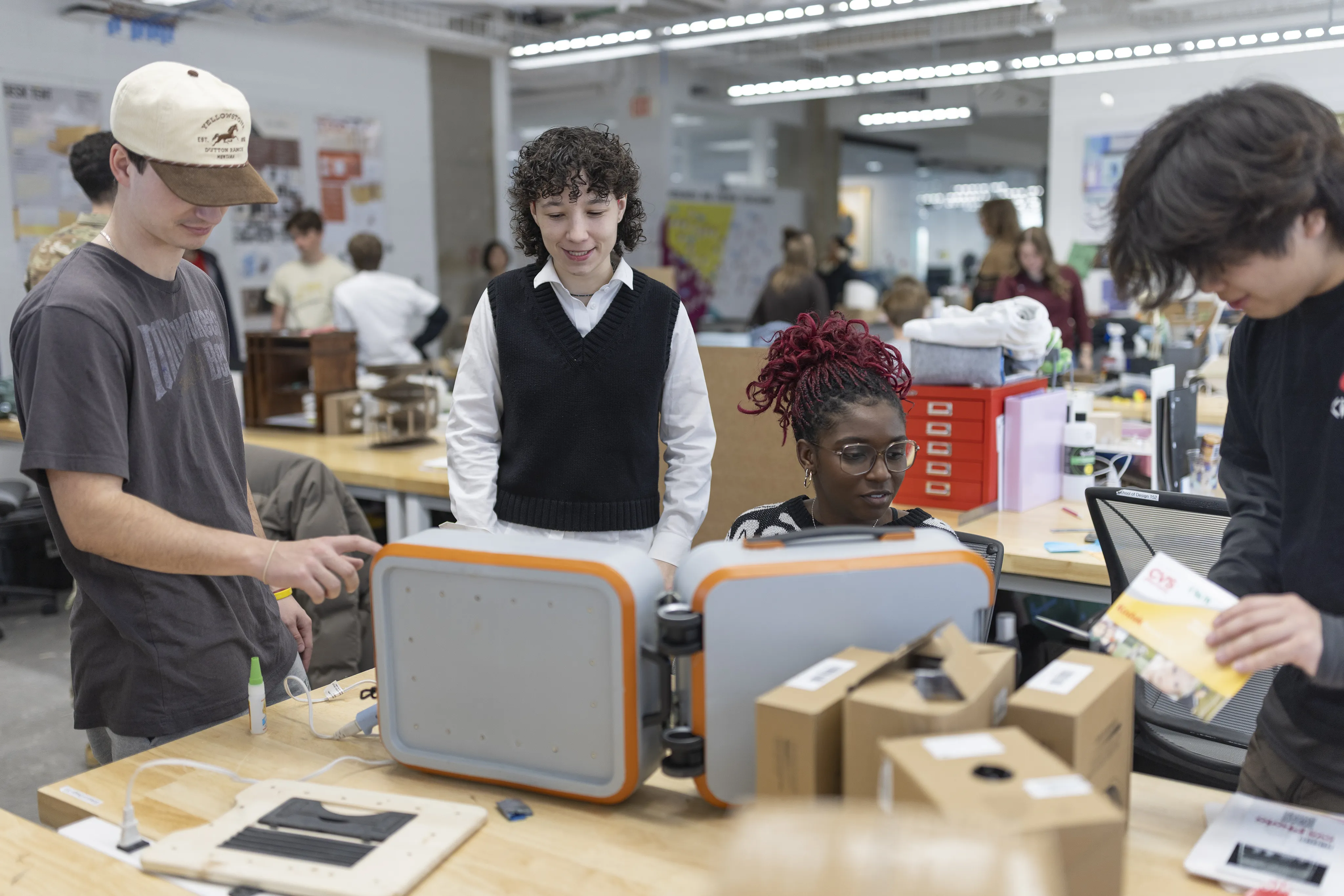
A defining feature of the sponsored studio is direct, in-person engagement with seniors from the beginning of the project. Any assumptions students start with are quickly adjusted through their conversations. Interviews with Warm Hearth residents surface daily challenges, personal routines, and emotional priorities that would be difficult to uncover through secondary research alone, especially since they are years from being members of this target demographic.
As one student explained, early plans shifted dramatically after these conversations: "We would bring our ideas to Warm Hearth and then the residents would either love it or they'd be like, ‘I would never use that.’ So, then we'd have to do a U‑turn." That kind of candid input forces concepts to bring the user front and center throughout the development process.
Residents are involved well beyond initial interviews. Throughout the semester, students return to Warm Hearth with mockups for roundtable discussions. Their potential customers handle the products, react in real time, and explain what feels intuitive or what feels unnecessary, while the students learn how to extract constructive feedback.
One undergrad noted how revealing these reviews were: "Having them interact with it, and observing how they pick it up, how they first touch it, is really important. You learn how they wouldn’t use it as much as how they would."
SFCS mentors play an important role in bringing real world experience to a group of minds uninfluenced by the current status quo of the senior living industry. Paired with classroom teams throughout the semester, SFCS mentors help ground their inventions in feasibility by asking questions about materials, cost, fabrication, and implementation. As one student described it, mentors helped ‘bring it back to reality’ so projects could move beyond conceptual thinking toward solutions that could work in everyday environments.
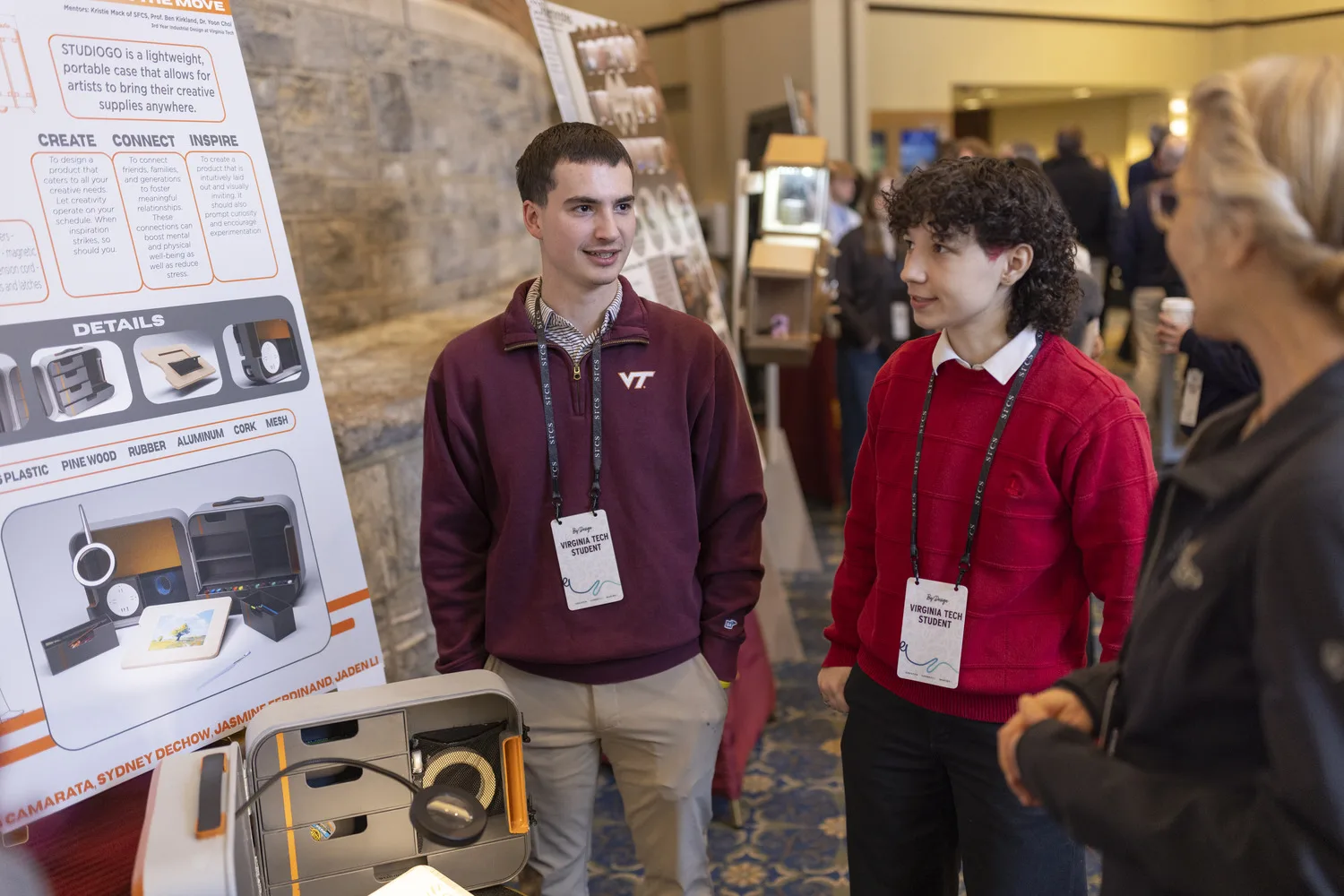
The 2026 studio produced a wide range of user informed concepts, each shaped through interviews, prototyping, and critique sessions. Projects presented on stage at By Design on February 4th, 2026 included:
Steady Stand: A device created to help users stand without placing strain on their shoulders or wrists.
Share Step: A portable bathtub aid developed to support safer entry and exit during bathing.
Birdhaus: A birdhouse system intended to encourage outdoor engagement and social connection through shared activity.
Reminotes: A display and writing system that allows residents to share meaningful objects and stories, fostering connection through personal history rather than technology.
StudioGo: A lightweight, portable case that allows an artist to bring their creative supplies anywhere.
Circadence: An aromatherapy experience combined with an alarm clock designed to regulate circadian rhythm.
Watch the product videos created by each team here.
The sponsored studio demonstrates something broader than community involvement or product innovation. It reinforces the importance of including the people for whom you are designing. When residents are invited into the work as active partners, their perspectives help shape solutions that are more grounded in daily life, more meaningful, and more likely to make a lasting difference.
This article is a summary of the content presented during the session “SFCS Sponsored Studio for Senior Living at Virginia Tech” presented by Ben Kirkland and Yoon Jung Choi, and moderated by Anne Hall and Helen Jadlowski, a former employee, at SFCS’s 41st By Design: Create. Connect. Inspire. on February 4th, 2026.
If this year’s conversations around creativity, connection, and future-focused design resonated with you, we hope you’ll consider joining us on February 2 - 4, 2027 at the Hotel Roanoke in Roanoke, VA. Let us know you are interested!

Our team is committed to providing quality service, meaningful connections, and thoughtful design. We believe the balance of these key elements has the power to encourage relationships and create exceptional environments where people – and projects – can flourish.
We improve our services and advertising by using Microsoft Clarity. Learn more by reading our Privacy Policy and Disclaimer.


