
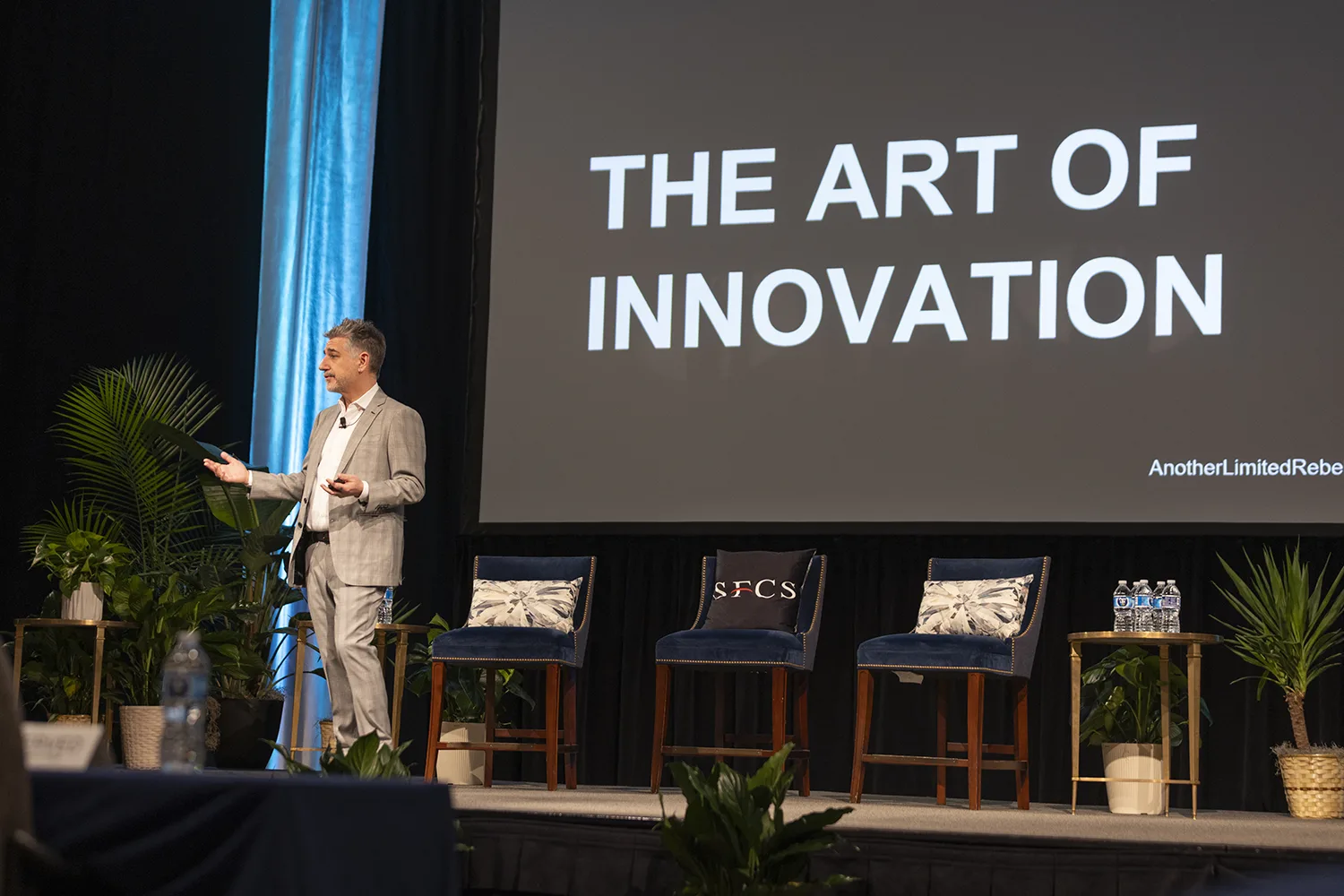
Senior living leaders are being asked to innovate while maintaining stability, quality, and trust, which raises the question: how can organizations build creativity and innovation at work without disrupting daily operations? Artist and consultant Noah Scalin argues that the answer begins with rethinking creativity, not as a personality trait, but as a skill that can be strengthened through intentional practice.
What You Will Learn
Scalin describes innovation as something to cultivate: the ideas are the seeds, but creativity is the soil. In many organizations, teams may be asked to “be innovative” without the time or space to experiment, reflect, or move beyond familiar approaches because outcomes are prioritized while the growing conditions an idea needs are overlooked. By treating creativity as a skill that can be developed across roles, leaders can create a stronger foundation for innovation alongside operational demands.
Scalin’s Big Seven principles show how small actions, imperfection, constraints, attention, fresh thinking, and collaboration can help organizations put that practice into motion.
Many professionals believe they are ‘not creative,’ assuming creativity belongs to artists or designers. Scalin challenges this belief, describing creativity as an inherent human trait that functions like a muscle. It weakens when unused but strengthens through regular practice.
In practice, this means creative problem solving is something teams can develop over time through repetition, not just talent.
Rather than ‘dreaming big,’ Scalin learned to move quickly from large ideas to the smallest possible action. Lowering the barrier to entry creates momentum, shifting teams from inaction to movement.
In senior living operations, this may mean testing a small, achievable change to a resident experience or internal process rather than waiting for a perfect, system‑wide solution.
Scalin’s daily creative practice taught him that early versions are first drafts, not failures. Expecting perfection at every step prevents learning and experimentation.
He notes that innovation, by definition, involves doing things that have not been done before. Leaders who allow unfinished ideas to be shared create conditions where teams can learn and adapt.
Time limits, budgets, and rules are often labeled as limiting factors, but Scalin found the opposite to be true: constraints provide structure and energy by giving creativity something to push against.
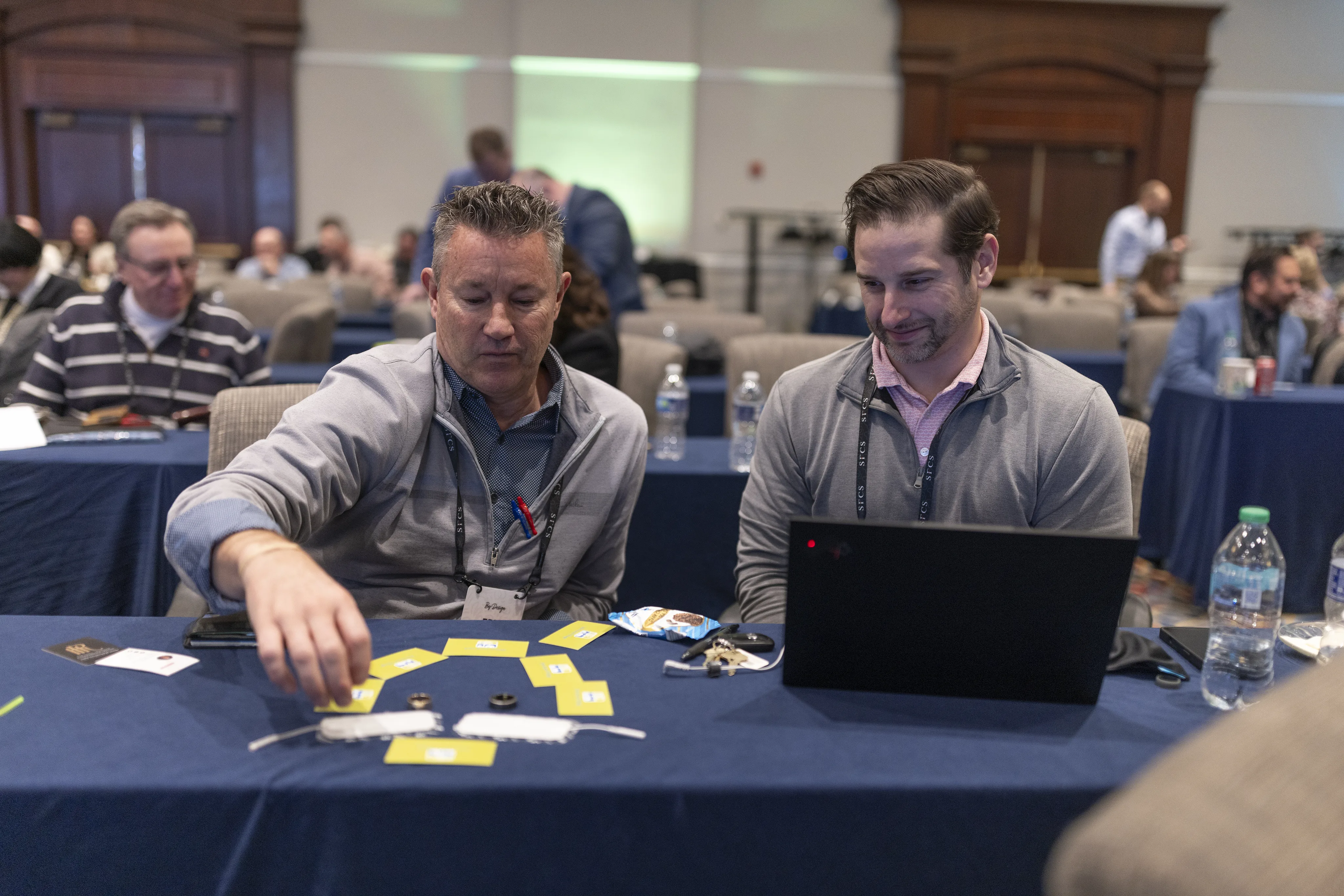
To demonstrate this, Noah has his audiences participate in an activity inspired by his “Skull a Day” project to make the principle tangible: with only two minutes, everyday objects, and a partner, participants have enough structure to stop overthinking and start creating. The exercise shows how a clear constraint and shared effort can lower the barrier to action, making experimentation feel more accessible and turning creativity from an abstract idea into a practice.
For senior living organizations there are often regulatory, staffing, and financial barriers to consider. Exploring creative solutions that circumvent barriers is often more effective than waiting for ideal conditions.
Unexpected results, mistakes, and deviations are usually treated as problems to correct. Scalin interprets them as signals for opportunities that can reveal new directions if leaders are willing to notice them.
These moments already exist in day-to-day operations. The question is whether teams are encouraged to examine them, because if not, those opportunities will quickly pass.
Scalin describes ‘default settings’ as the familiar ways people approach problems because they have worked before. But, when conditions change, those defaults can limit new thinking.
Creative practice expands the range of available responses and allows leaders and teams to move beyond habitual solutions when circumstances demand something different.
Even if a project Scalin is working on appears solitary, it still depends on others in the form of feedback, ideas, materials, and encouragement. Creativity, he argues, is not owned by individuals but grows through interaction.
To put this principle into perspective, invite input across organizational roles and disciplines, especially when navigating complex challenges.
Scalin’s Big Seven Principles have a consistent theme: creativity is built through practice, not inspiration. When leaders create space for small experiments, accept imperfections, and encourage collaboration, innovation becomes sustainable rather than disruptive.
____________________________________________________________________________________________________
This article is a summary of the content presented during the session “The Art of Innovation” presented by Noah Scalin at SFCS’s 41st By Design: Create. Connect. Inspire. on February 5th, 2026.
If this year’s conversations around creativity, connection, and future-focused design resonated with you, we hope you’ll consider joining us on February 2 - 4, 2027 at the Hotel Roanoke in Roanoke, VA. Click here to let us know you are interested!

Our team is committed to providing quality service, meaningful connections, and thoughtful design. We believe the balance of these key elements has the power to encourage relationships and create exceptional environments where people – and projects – can flourish.
We improve our services and advertising by using Microsoft Clarity. Learn more by reading our Privacy Policy and Disclaimer.


